How to Start Collecting Midwest Art: A Beginner's Guide to Building a Meaningful Collection
The most common thing I hear from people who want to collect art but haven't started yet is some version of: "I don't know enough." The second most common is: "I can't afford it."
Both of these beliefs are wrong in ways that are worth examining carefully — because they keep genuinely curious people from one of the most rewarding relationships a person can develop.
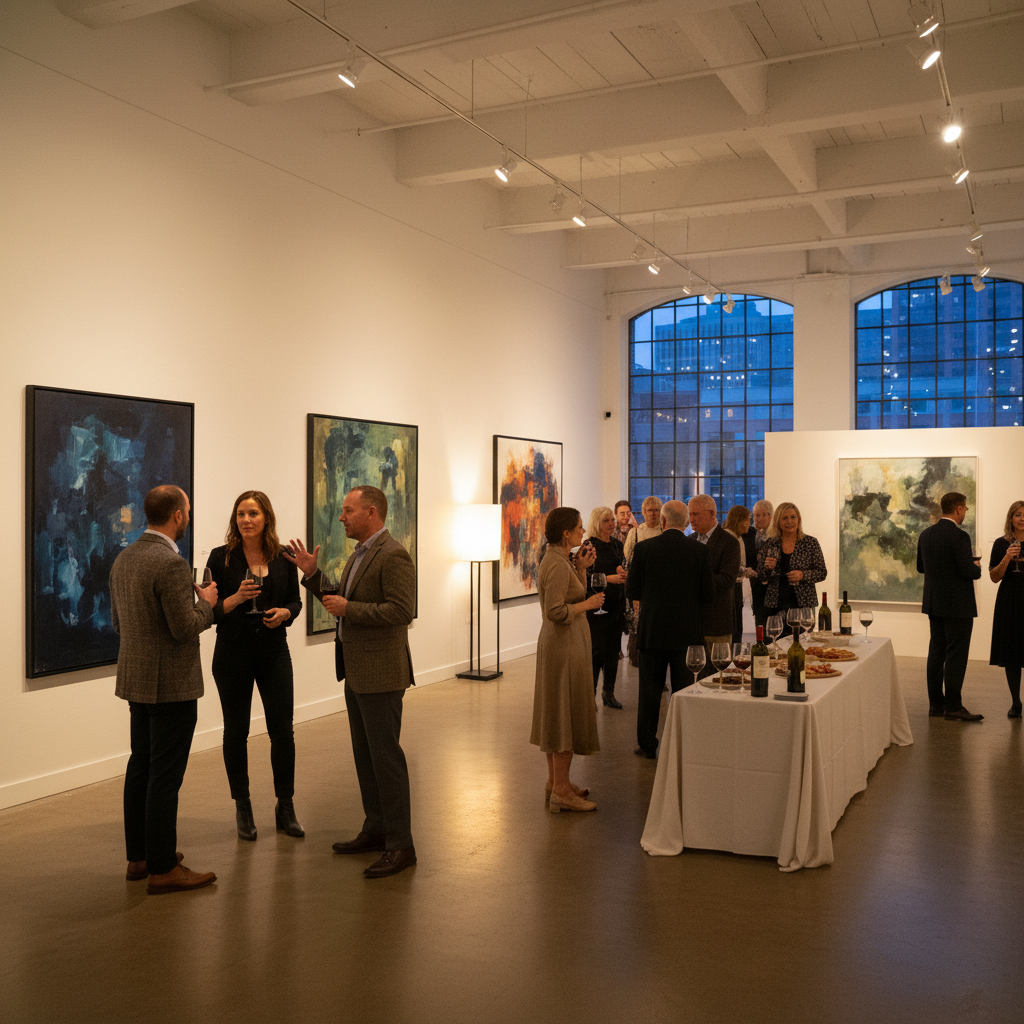
This guide is specifically focused on collecting Midwest art — not because it's a compromise, but because the Midwest art market offers conditions that are genuinely favorable for new collectors. Prices are rational. Artists are accessible. The work is serious. And the community is welcoming in ways that major metropolitan art markets often aren't.
What Art Collecting Actually Means
Let's clear away some mythology. "Collecting art" does not mean:
- Spending $10,000 or more on a single piece
- Buying work as a financial investment
- Needing to understand art history before you can trust your own eye
- Having a relationship with a dealer who represents major-market artists
Art collecting simply means acquiring works that you want to live with — that earn their place on your wall through emotional resonance, visual pleasure, or intellectual engagement. The rest is detail.
That said, there are approaches that make the process more rewarding and less error-prone, particularly for people building a collection from the beginning.
Why the Midwest Is the Right Market for New Collectors
The American art market is highly geographic. New York, Los Angeles, and — to a lesser extent — Chicago set prices, generate critical attention, and define what counts as "important" in any given moment. The work of artists operating outside these centers tends to be priced significantly below its quality level, simply because of geography.
For a new collector, this is an extraordinary opportunity.
What You Actually Get for Your Budget
In Milwaukee, Madison, or Minneapolis, $500 to $2,000 buys you:
- Original paintings by professionally trained artists with serious exhibition records
- Limited-edition prints by artists whose work is held in major museum collections
- Ceramics, sculptures, and textiles of genuine craft quality
- Work by artists who will, in many cases, have meaningful careers and whose early work will be the most interesting they ever produce
The same budget in a New York or Los Angeles gallery gets you a small work on paper by an emerging artist, if you're lucky.
Finding Artists: Where to Look
University MFA Shows
The single best source of emerging talent in any region is the MFA thesis exhibition at the regional art schools. UW-Madison, MIAD (Milwaukee Institute of Art and Design), and MCAD (Minneapolis College of Art and Design) all hold annual thesis exhibitions that are open to the public.
At these shows, you're seeing artists at the moment of maximum creative intensity — when they've just had three years to develop a focused vision under intensive critique, and before market pressures have shaped what they make. Prices are often at their lifetime lowest.
Open Studio Events
Many Midwest cities host annual open studio tours — events where working artists open their studios to the public, often over a weekend. These are invaluable for collectors because they allow you to see an artist's work in its full context: the progression of ideas, the work in progress, the physical space where the art is made.
Chicago's Open Studios events, the Walker's Point artist studio tour in Milwaukee, and Madison's own open studio events are all worth attending.
Artist-Run Galleries
The best art is often not in the high-traffic commercial galleries. Artist-run spaces — cooperatives, collectives, and DIY galleries — tend to show work that takes more risks, from artists who are actively pushing their practice rather than producing sellable variations on proven formulas.
In Milwaukee, look for spaces like Var Gallery and the Portrait Society Gallery. In Madison, the Union Gallery and the Tandem Press bookstore and exhibition space. In Minneapolis, Midway Contemporary Art and the Soap Factory.
Art Fairs
The Milwaukee Art Fair at the Museum and Madison's Art Fair on the Square both happen in June and represent the most concentrated opportunity to see and purchase work from the broadest range of regional artists in a single visit.
The Buying Process: What to Expect
In a Gallery
Commercial galleries generally expect you to spend some time looking before approaching a salesperson. It's perfectly acceptable to visit multiple times before buying — even encouraged. Ask questions about the artist's background, exhibition history, and whether their work is in any museum collections.
Never feel pressured to purchase. A reputable gallery wants you to leave with work you love, because the relationship that follows — repeat business, referrals — is more valuable than a single transaction.
From the Artist Directly
Many Midwest artists sell directly, particularly at open studios and art fairs. This has several advantages: you meet the person who made the work, you can ask questions that go deeper than a gallery's talking points, and the price is often (though not always) lower without gallery commission.
If you're buying from an artist directly, ask for a receipt that describes the work — title, medium, dimensions, date — and the artist's contact information. This documentation becomes part of the work's provenance.
What to Look For: Developing Your Eye
The most honest advice I can give: look at a lot of art before you buy any. Not to develop expertise — though that comes — but to begin understanding what your particular visual sensibility responds to.
Trust Sustained Response Over Immediate Reaction
Impressive technical skill creates immediate reactions. So does novelty. Neither is a reliable guide to what you'll want to live with for decades.
The work that has staying power tends to reveal something new on each viewing — a color relationship you missed, a spatial ambiguity that resolves differently depending on where you're standing. This quality of sustained interest is harder to manufacture and more reliable as a guide to quality.
Pay Attention to How Work Is Made
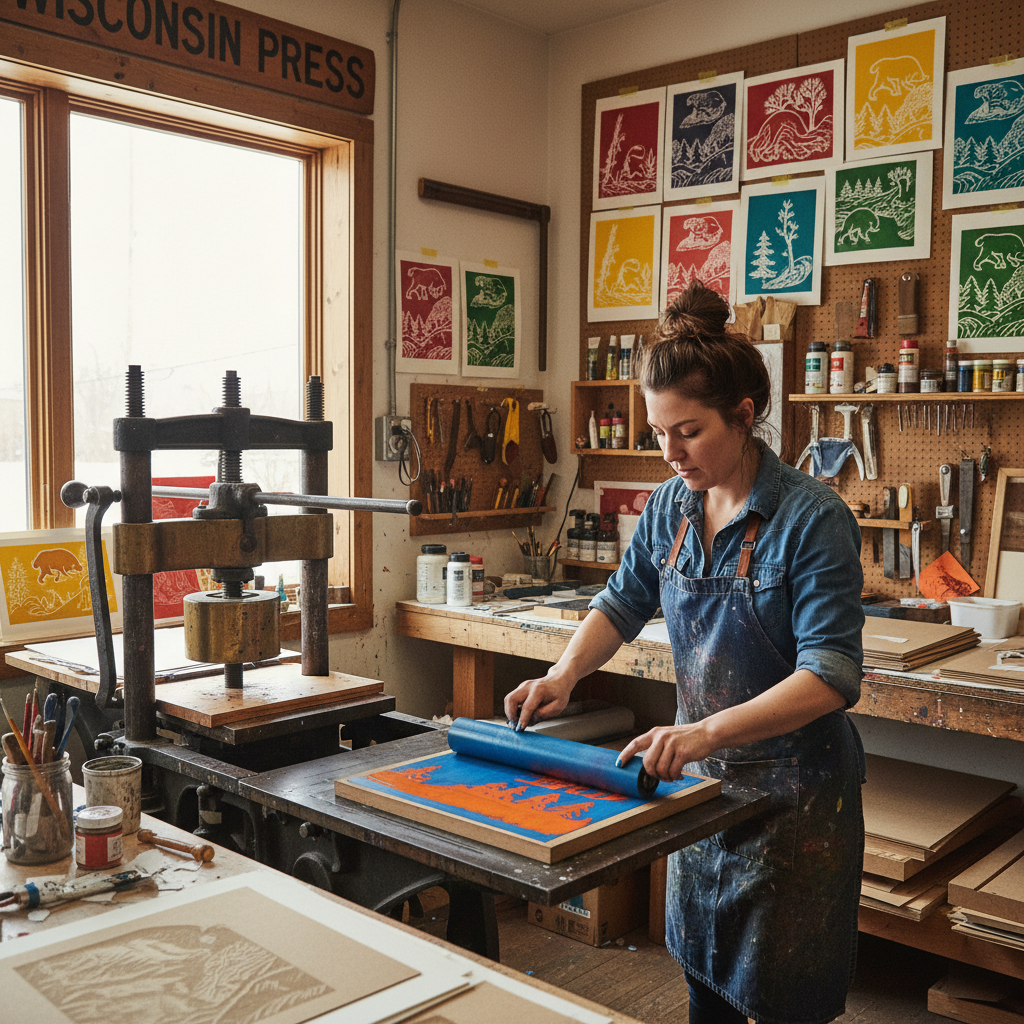
Understanding medium and process isn't mandatory, but it's enriching. A ceramicist who builds coils by hand is doing something fundamentally different from one who throws on a wheel — and the trace of that process is visible in the finished work. A printmaker who pulls each print manually produces something that an inkjet reproduction can never replicate.
The more you understand how work is made, the more you'll appreciate the choices artists make — and the better your eye will become.
Caring for Your Collection
Once you've started acquiring work, protecting it matters.
Light: UV light degrades most media — fading pigments, yellowing paper, bleaching textiles. Hang works away from direct sunlight and consider UV-filtering glass for any framed works on paper.
Humidity: Significant humidity fluctuations can damage panel paintings, wood sculptures, and works on paper. Most homes are fine; extremely dry heating in winter is the most common problem in Wisconsin climates.
Documentation: Keep records of everything you buy — provenance documentation, receipts, photographs of the work before and after framing. If you ever want to sell, donate, or insure your collection, this documentation is essential.
Frequently Asked Questions
How much should I spend on my first piece of art?
Spend whatever you're comfortable losing — because art is not a guaranteed financial investment. For most new collectors, a first purchase in the $200 to $1,000 range is manageable enough to not create buyer's remorse if your tastes evolve, while substantial enough to buy genuinely interesting work.
Should I buy art as an investment?
Only if you plan to buy at the very highest market tier — works by artists who already have major institutional backing. For most collectors, treating art as investment leads to buying what seems likely to appreciate rather than what you love. This is a reliable path to a mediocre collection.
How do I know if an artist is worth collecting?
Look for consistent exhibition history, engagement with the critical discourse of their medium, and a body of work that demonstrates sustained development over time. Artists who are just making sellable objects without any deeper creative ambition are rarely interesting to collect.
Where can I sell art if I change my mind?
Regional auction houses (Leslie Hindman in Chicago is the dominant Midwest option), direct resale through artist-run platforms, or — if the artist has developed their career — through the gallery that represents them.
Conclusion
The best Midwest art collections were built by people who showed up — to the MFA shows, the open studios, the art fairs — consistently and curiously over many years. The market rewards patience in ways that art markets in New York and Los Angeles no longer can.
Start small, trust your sustained responses, and build relationships with artists and galleries. The collection that follows will be something far more personal and meaningful than any financial portfolio.
Explore our artist spotlight features and find work by emerging Midwest artists at our events calendar.