Midwest Street Art Guide: Murals, Graffiti Culture, and Public Art Worth Seeking
There's a persistent idea that great street art happens only in New York, Los Angeles, and Miami. Walk through Milwaukee's Walker's Point, Chicago's Pilsen neighborhood, or Minneapolis' East Lake Street corridor, and you'll understand exactly why that idea is wrong.
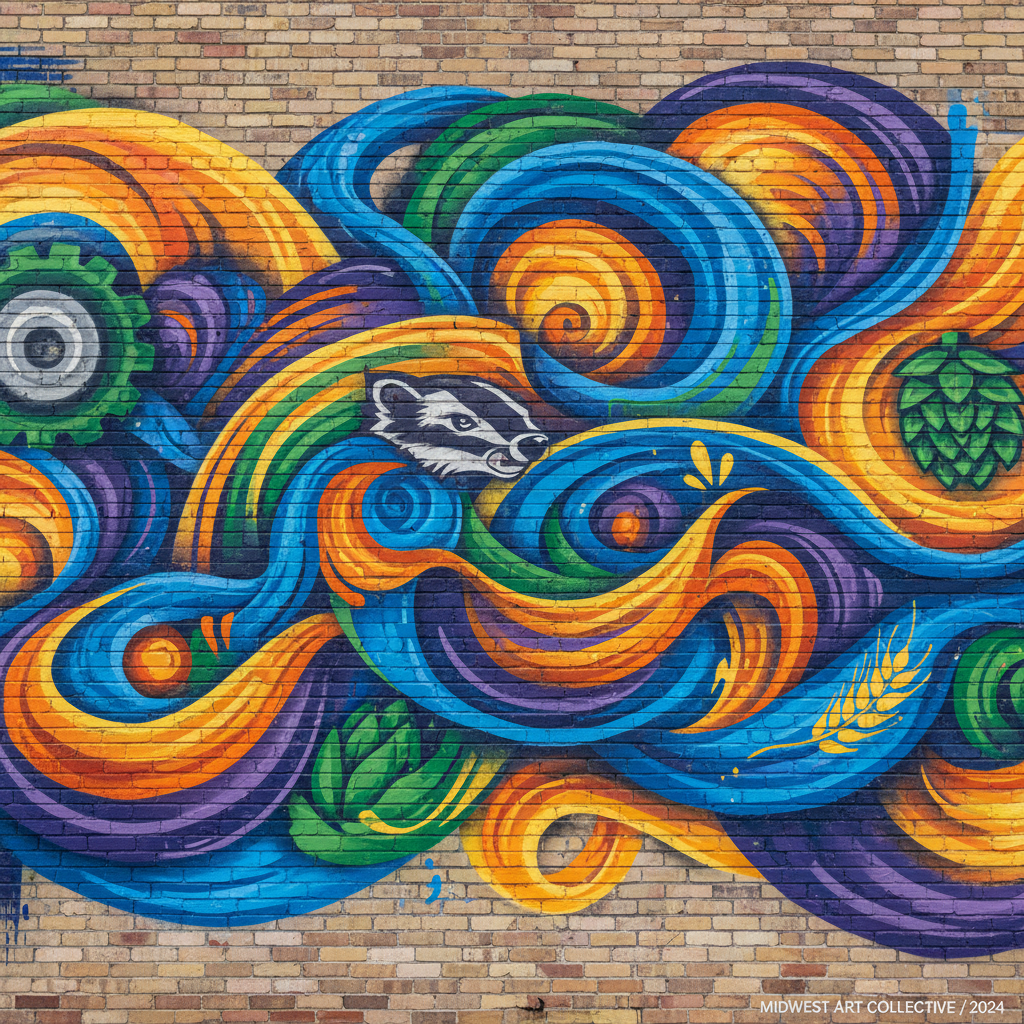
The Midwest's urban walls have become extraordinary canvases over the past decade, driven by a combination of community investment programs, artist-run initiatives, and a street art culture that has developed its own regional identity. This guide covers the best public art experiences in Wisconsin, Illinois, and Minnesota — and the context that makes them worth understanding.
Milwaukee: The Emerging Capital of Midwest Muralism
Milwaukee's mural scene has developed faster than any other in the region, catalyzed by several factors: a significant community of professional muralists, a network of neighborhood organizations willing to fund public art, and a stock of industrial-scale brick walls that provide the scale street artists dream about.
Walker's Point Arts District
Walker's Point is the epicenter of Milwaukee's creative community, and its walls reflect that status. The neighborhood contains the highest concentration of quality murals in Wisconsin — works by both Milwaukee-based and nationally touring mural artists who are drawn by the neighborhood's scale and its community of engaged viewers.
Key works to seek out:
- A monumental portrait of Milwaukee jazz pioneer Pee Wee Ellis on South 2nd Street
- An abstract geometric installation covering the entire south face of a former manufacturing plant on West National Avenue
- A community history panorama on the former Mitchell Street industrial block that spans four buildings and over 200 feet
Green Bay Alley Arts Project
As we explored in our feature on Green Bay's public art scene, the city's alley arts project has transformed a network of downtown alleyways into one of the Midwest's most ambitious outdoor gallery systems. The sixty-plus murals include documentary work, abstract painting, and community portraits that are embedded in the neighborhood's history.
The project continues to expand, with new commissions awarded annually through an open application process. The Alley Arts Project maintains a downloadable walking tour map on its website that includes artist information and the stories behind each piece.
Chicago: The Benchmark
Chicago's public art tradition is the longest and deepest in the Midwest. From the muralist tradition of the New Deal era — the federal art programs that decorated post offices, schools, and public buildings across the city in the 1930s — to the contemporary community mural movement, Chicago has been covering its walls with intention for nearly a century.
Pilsen
The Pilsen neighborhood on Chicago's Lower West Side is widely considered to have the best concentration of murals in any American city outside Los Angeles. The neighborhood's Mexican American cultural tradition, anchored by the National Museum of Mexican Art, produces a mural culture of genuine depth and sophistication.
The murals here range from devotional religious imagery to political commentary to abstract art that uses the wall format to achieve scale impossible in the gallery. Walking the 18th Street corridor and the surrounding side streets takes at least two hours to do properly; budget half a day if you're serious about seeing the best work.
The 606 Trail
Chicago's elevated trail system, built on a former elevated freight rail line, passes through neighborhoods whose retaining walls and abutments have been turned into an elongated gallery. The art installed along The 606 is commissioned specifically for the space and ranges from permanent installations to temporary works that change seasonally.
Wicker Park and Logan Square
These adjacent North Side neighborhoods host some of Chicago's most technically ambitious mural work — photorealistic portraiture, large-scale trompe l'oeil, and abstract works that play with the architectural features of their surfaces in sophisticated ways.
Minneapolis: Public Art as Civic Investment
Minneapolis has the most systematized public art program in the Midwest. The city's Percent for Art ordinance — requiring that 1% of capital improvement project budgets be allocated to public art — has produced an extraordinary infrastructure of commissioned works in public spaces across the city.
East Lake Street Corridor
In the aftermath of the 2020 protests and the subsequent reconstruction of the Lake Street corridor, Minneapolis invested heavily in public art as part of the rebuilding process. The murals that line East Lake Street today represent a sustained act of community expression — works that document recent history, honor community members lost, and articulate visions of what the neighborhood wants to become.
Midtown Global Market
The Midtown Global Market, housed in a former Sears building in South Minneapolis, incorporates art throughout its public spaces as an expression of the building's multicultural community of vendors and visitors. The corridor art and common area installations are worth examining carefully — they represent a model of public art as genuine community expression rather than aesthetic decoration.
Northeast Minneapolis Arts District
Northeast Minneapolis has developed one of the highest concentrations of working artist studios in the Midwest, and the neighborhood's public art reflects that density of creative practice. The annual Art-A-Whirl open studio tour is the best opportunity to explore the neighborhood's public art alongside the studios that surround it.
Madison: Small City, Serious Murals
Madison's mural tradition is proportionate to its size — smaller than Milwaukee or Chicago, but consistently serious. The Williamson Street corridor and the Near East Side have the highest concentration of interesting work, reflecting those neighborhoods' strong progressive political culture and their tradition of community organizing.
The Madison Arts Commission's public art program produces regular commissions for temporary and permanent works throughout the city. The commission maintains a public art database on its website with location maps and artist information.
Understanding Street Art: A Brief Guide for New Viewers
The Difference Between Murals and Graffiti
The terms are often used interchangeably, but they describe different practices. Murals are typically commissioned or permitted works — large-scale paintings applied to building exteriors with property owner consent, often funded through public art programs or neighborhood organizations.
Graffiti, in the traditional sense, refers to unauthorized work: tags, pieces, and throw-ups applied without permission. The distinction matters because it affects how you encounter the work (commissioned murals are stable and documented; unauthorized graffiti is often temporary), how artists are compensated, and how the work relates to its community.
Reading Mural Content
The best murals are not purely decorative. They reference specific histories, communities, and meanings that require some familiarity to fully appreciate. When possible, research the mural's context before or after viewing — the artist's statement, the commissioning organization's explanation, and community responses to the work.
Many murals in Midwest cities depict historical figures or events that are specific to the community where the wall is located. Understanding who these people are, and why they were chosen for commemoration, reveals layers of meaning that aren't visible to the uninformed viewer.
Practical Guide to Mural Hunting
Tools and Resources
Google Street View: Useful for identifying murals along specific streets without traveling. Many murals are documented in street view imagery, though coverage varies.
Instagram: Search location tags for cities and neighborhoods alongside terms like "mural," "streetart," and "publicart." The artist community is active in documenting and sharing mural work on Instagram.
City public art databases: Milwaukee, Chicago, and Minneapolis all maintain public databases of commissioned public art with location information.
Local arts organizations: The Milwaukee Arts Board, the Chicago Department of Cultural Affairs, and Forecast Public Art in Minneapolis all publish guides and maps to public art in their respective cities.
Photography Best Practices
Most murals are best photographed in diffuse light — overcast days or the soft golden hours of early morning and late afternoon. Direct midday sun creates harsh shadows that flatten the work and make color representation inaccurate.
Always credit the artist when sharing mural photography. Many mural artists have Instagram accounts and appreciate being tagged when their work is documented and shared.
Frequently Asked Questions
What is the best city in the Midwest for street art?
Chicago (Pilsen specifically) has the deepest tradition and highest concentration of quality work. Milwaukee is producing the most interesting new work. Minneapolis has the most systematized public investment in public art.
Are there walking tours of Midwest murals?
Yes — Milwaukee's Alley Arts Project has a self-guided walking tour map. Chicago's Pilsen neighborhood is covered by several tour operators. Minneapolis's Forecast Public Art organization publishes a public art guide for the city.
Is it legal to photograph street art and murals?
In the United States, photographing publicly visible artwork (including murals on the exterior of buildings) is generally legal under the Visual Artists Rights Act's public display provisions. However, using those photographs for commercial purposes may require permission from the artist. Personal and editorial use is generally unencumbered.
How do I find out who painted a specific mural?
Many murals include the artist's signature, Instagram handle, or year of completion. City public art databases list commissioned work with artist information. For uncredited work, the neighborhood arts organization or property owner may have records.
Conclusion
The Midwest's public art scene is one of the most vital and least celebrated in the country. The murals covering the walls of Milwaukee, Chicago, and Minneapolis represent a sustained investment in community expression, cultural memory, and visual environment that rewards the curious and attentive viewer.
For more on Midwest street art and public culture, read about Green Bay's Alley Arts Project and explore our guide to things to do in Madison.